

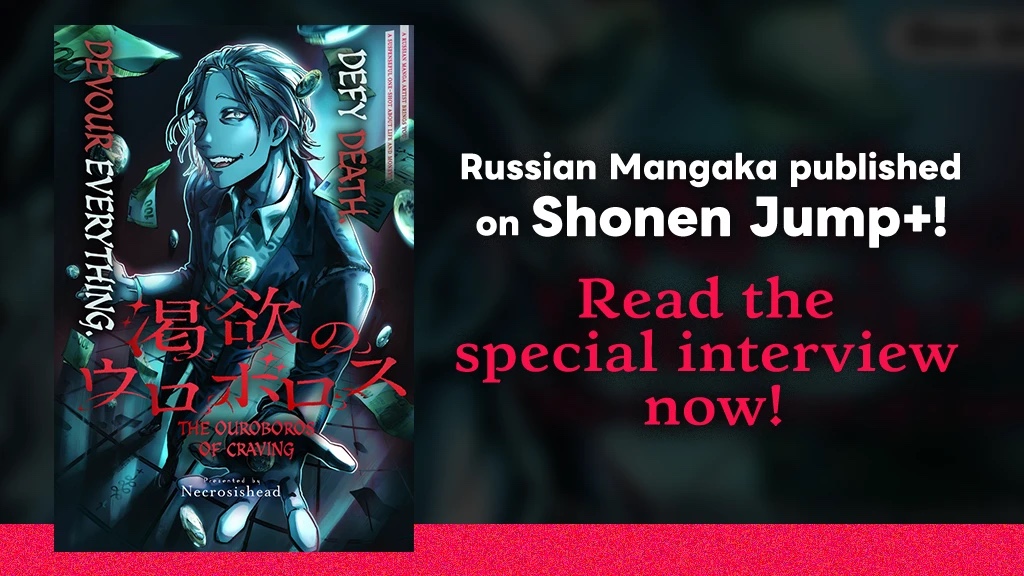
Interview with Russian manga artist Necrosishead, about Shonen Jump+ original one-shot "The Ouroboros of Craving"!
Defy death, consume everything. The Russian manga artist Necrosishead explores a strange curse and the feeling of exploitation that lies in its shadow in the new one-shot, The Ouroboros of Craving. Necrosishead spent six months tailoring the main character, Emil, and creating artistic expressions and structures that are sure to live on in the minds of readers for her first Shonen Jump+ original one-shot. Now, after bringing her idea to life, we asked her to walk us through the process of having a one-shot published in Japan, what she wants to convey with her manga, her dreams for the future, and her message for manga creators around the world.
作品・作家紹介
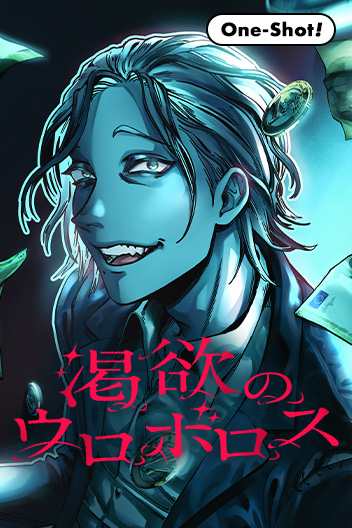
Synopsis: A suspenseful one-shot about life and money brought to life by Russian manga artist Necrosishead!! No one can escape the rat race of capitalism… Faced with the need for large sums of money to survive and with everything on the line, will Emil live to see tomorrow?!


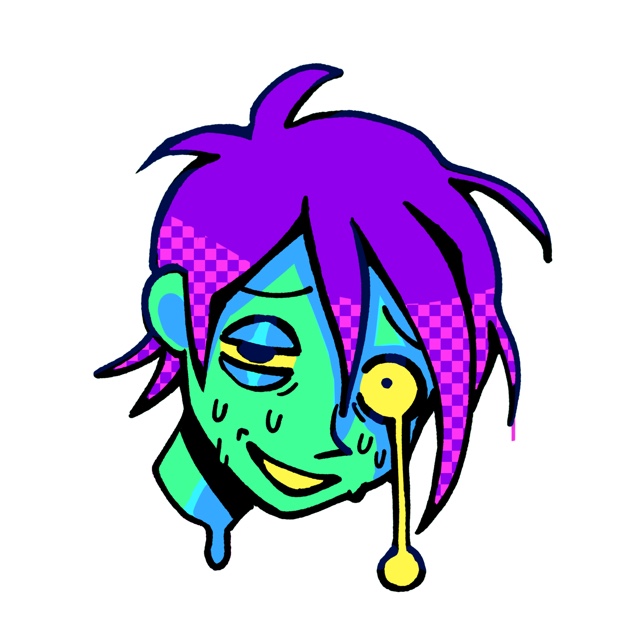
Russian manga artist and graphic designer currently residing in Austria. Winner of the 2024 MAGIC International Manga Contest and First Prize winner of the Shonen Jump+ and Japan Expo’s joint Manga Contest in 2025. Her hobbies are walks with her pomeranian and playing the guitar.
1. About the production of The Ouroboros of Craving and its publication on Shonen Jump+
──What was the original inspiration behind your latest work, The Ouroboros of Craving?

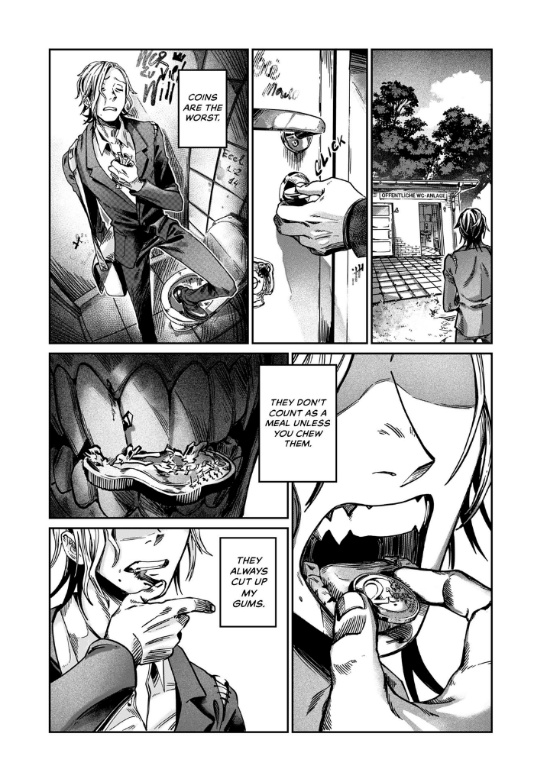
I wanted to build upon the concept of being forced to eat money. It’s quite visceral, the idea of having to chew metal coins, being aware of how unhygienic it is, and you can immediately imagine the sensation and the smell. This concept is not far off from the reality of many people who live paycheck to paycheck and these two things overlapping was fascinating to me.
© 2026 by Necrosishead/SHUEISHA Inc.
──How did the central concept of this work, a curse that requires one to continuously consume money or value in order to sustain their body, come about? Also, were there any particular techniques you employed to incorporate this idea into the story?
An exchange of goods and services is not a viable alternative for money in our society, but I found it amusing to give money a more direct meaning, having it be literal sustenance for our main character. Especially since I feel like I’m not the only one who at some point in their life had to lay out sad looking packages of instant noodles and try to calculate how long you can realistically last on that. I hope there is something relatable in this story for the readers.
That said, I think that if we summed up the core theme in a single word, it would be “exploitation.” The feeling of this noose tightening around your neck, even as you do your best to survive in an unfair situation that may lead you to end up making bad choices along the way…
For this story, I did struggle with maintaining the balance of the somewhat mild body horror against pushing the boundaries of how graphic it could be but, as always, the golden rule is: less is more! I also did a bit of a back-and-forth on the origin of the curse.
──What was the main theme or idea that you especially wanted to express through The Ouroboros of Craving?
The feeling of powerlessness and giving up morals in the face of pure desperation! Of course, this story can be read as a direct analogy for capitalism, however my outlook on real life is still a little bit more optimistic than that. For now.
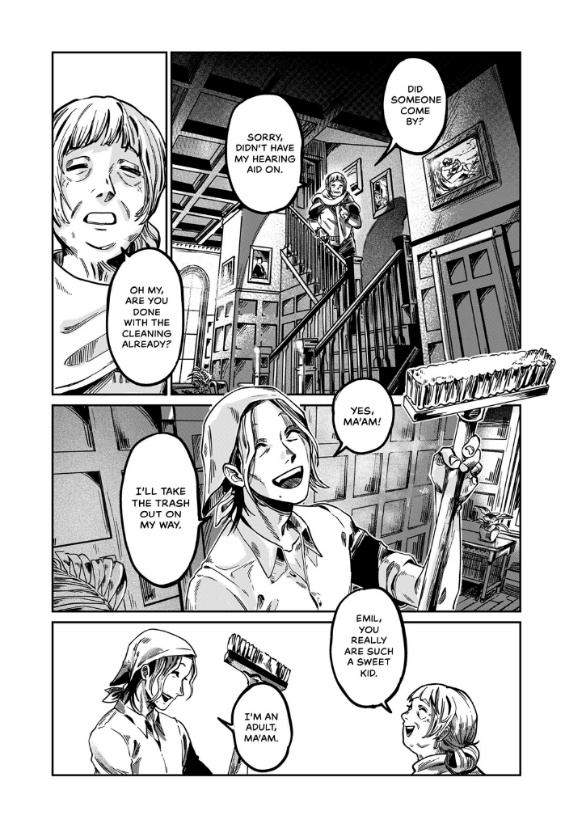
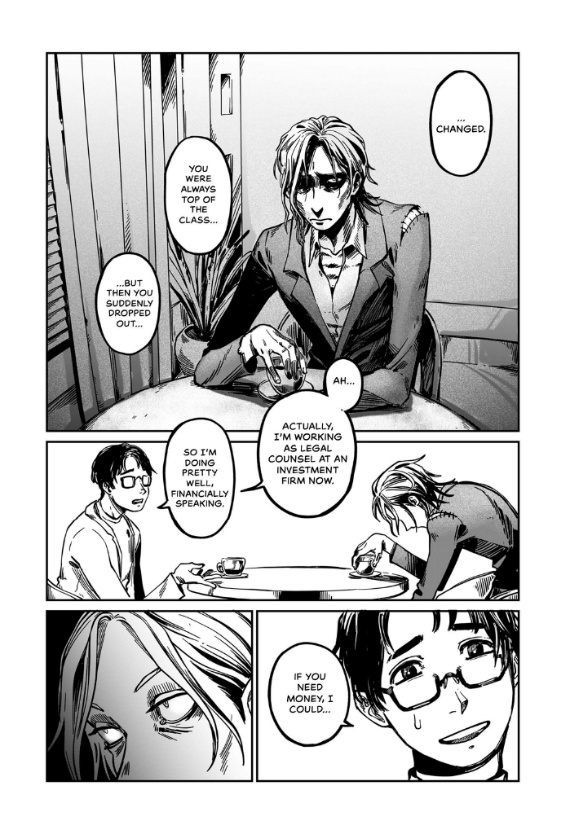
──How did you develop the protagonist Emil's personality, background, and character design?
I really wanted his design and personality to have plenty of room for variations, going from this sleazy vibe he has in the beginning of the story, to his kind and dependable self in the past. I wanted to highlight the contrast between the different phases of his life, while preserving the throughline of his personality. At his very core, he is a kind person with just a little bit too much pride, but he is still very much shaped by his circumstances, as well as being a deeply damaged individual.
© 2026 by Necrosishead/SHUEISHA Inc.
© 2026 by Necrosishead/SHUEISHA Inc.
──In the latter part of the story, the concept of value shifts from material wealth to potential. What was your intention behind creating this turning point?
I was trying to evoke the feeling of being trapped in the system: if you are not the one being exploited – then you are the one exploiting other people. A person’s potential and their own personal worth were a natural step-up from money!
──What was the intention behind Emil's final decision (giving up the pursuit of worth) in the story?
Initially I was going to go with a more tragic ending, but it might have been a bit too brutal… In the final version, Emil is going out on his own terms, instead of letting the curse control and consume him. Whether he consciously knew that he had found a way to beat this perpetual curse or not, I will leave it up to the reader to interpret.
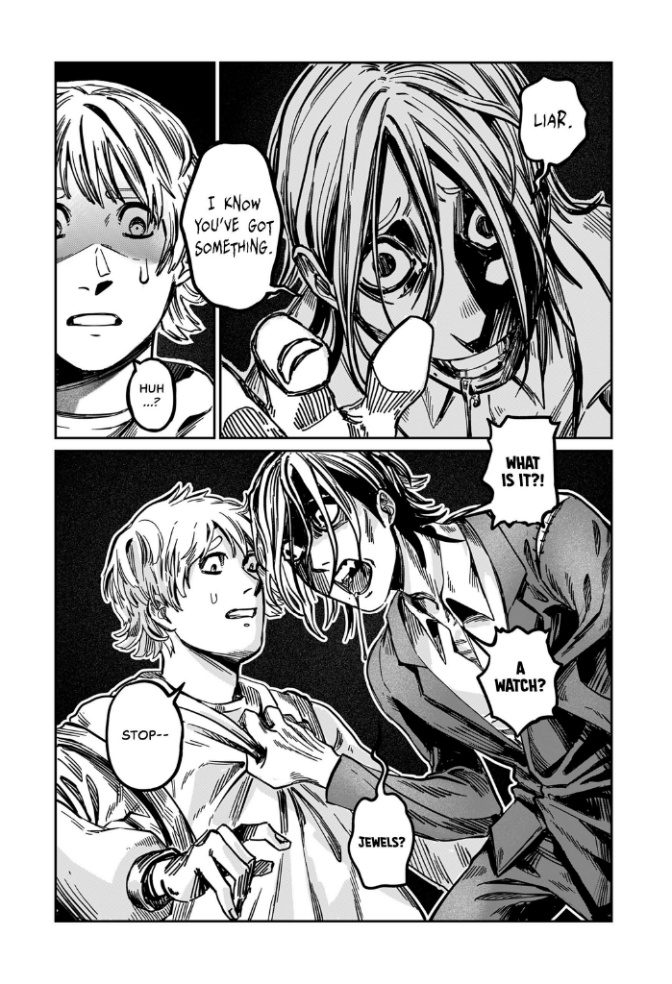
──The characters’ facial expressions were brilliant. Are there any particular techniques or principles you keep in mind when drawing expressions?
I like to make them a little “unrealistic”, for the lack of a better term. I like analyzing actors’ expressions when I watch movies, but I tend to draw without a direct reference, so it ends up being more true to my art style.
© 2026 by Necrosishead/SHUEISHA Inc.
──Your shading techniques and dark backgrounds were quite impressive. How do you approach balancing black and white elements within your artwork?
I try to emulate the light and shadows that I envision in my head when I imagine a scene - but I’m still trying to find a better balance!
──Do you have a particular panel from this work that you are especially fond of?
Every time Emil eats something (or someone).
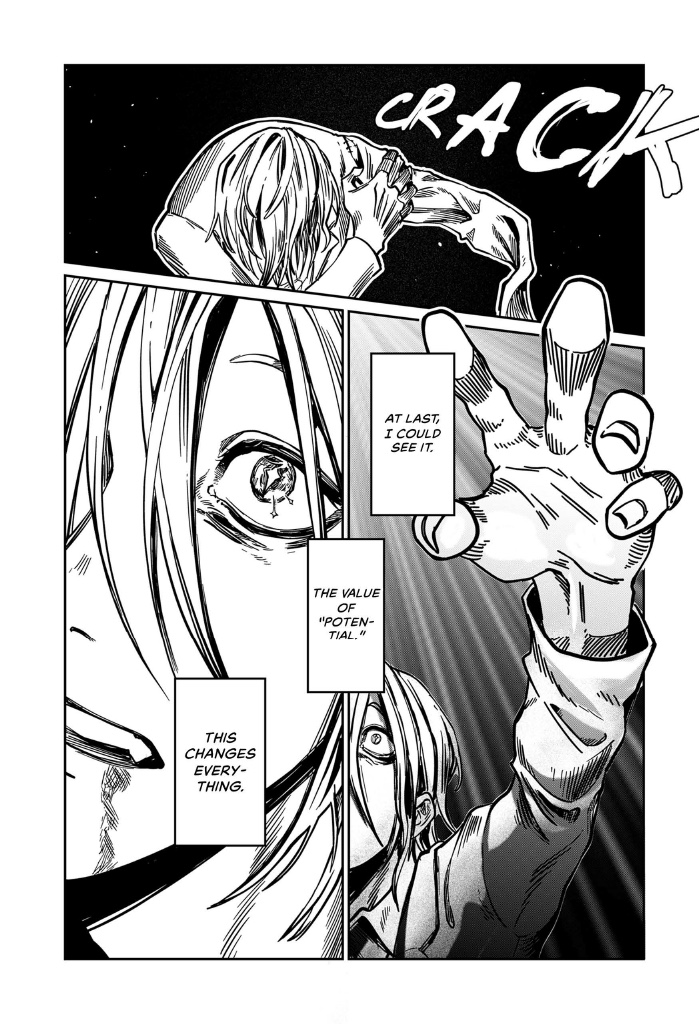
──Were there any new techniques or forms of expression that you experimented with while creating this work?
I tried to really pay attention to poses and framing to make the scenes more memorable. I also loved placing some elements outside of panel frames, but next time I’d love to take an even bolder approach.
© 2026 by Necrosishead/SHUEISHA Inc.
──What feedback was received during the editorial review process, and how did it shape the final version of the one-shot?
It took about six months from the initial script I submitted to the proper manuscript that was approved. This was my first time working with an editor and I absolutely loved it. There were many more details that I was able to pick up that would’ve never been noticed if I’d been working by myself. I think the theme became much more streamlined and focused after the revisions, the progression, and clarity of the story improved. Some specific comments I clearly remember were: “This specific localized thing might be a little difficult for readers to understand” and “This ending is too sad.”
──Compared to your previous one-shots Otherside Bell and With Open Arms, were there any aspects that you consciously approached differently?
I want to think that I’m slowly improving with every story, and that my approach to each one of these was wildly different. With Open Arms was an expression of my personal frustration with current events. Otherside Bell was filled with hope. However it was a bit of an unsuccessful attempt to reduce a very long story to a one-shot, and my current story is the reverse of that: I planned it as a one-shot from the beginning and wanted to give the main character a proper personal journey!
2. Your Approach as a Creator
──When creating manga, is there a particular part of the process that you consider especially important, such as plotting, storyboarding, or drawing?
I learnt a lot through the revision process with my very patient editor. In the end, the most important part is storyboarding, which is what makes or breaks the story. As you draw the storyboard you innately discover what actually translates well from a written script and what doesn’t, how visuals and paneling change the pacing and how important it is to be flexible. But of course, all of the different phases of manga creation are fun and engaging in their own way.
──We understand that you are working as a graphic designer. In your opinion, what makes manga uniquely compelling compared to a regular illustration?
Movement! Whether it’s the progression of the story, character development or a literal action scene, something always changes and moves in manga. An illustration is nice to look at and fun to create, but for me personally, nothing is as satisfying as reading a good manga for the very first time.
© 2026 by Necrosishead/SHUEISHA Inc.
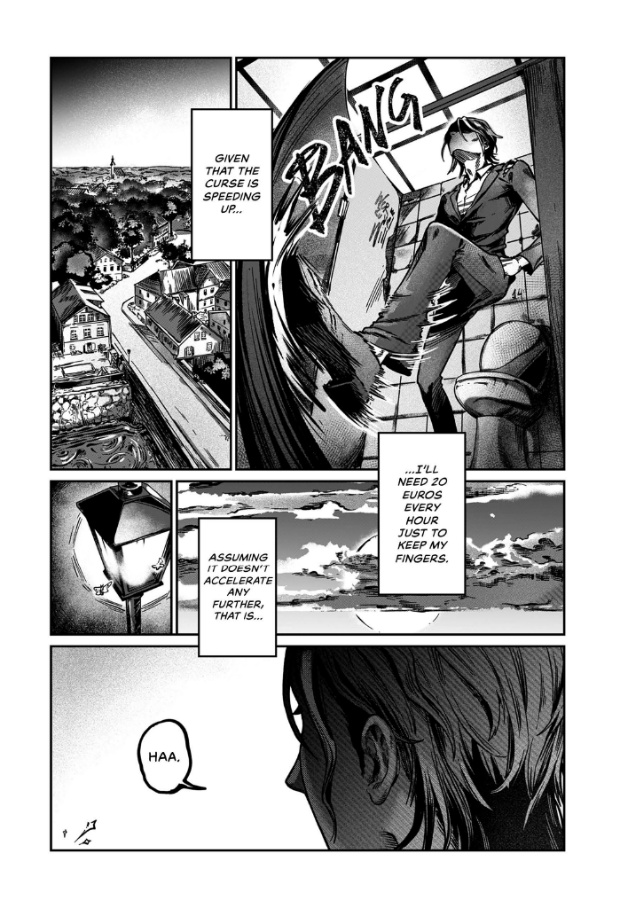
──Are there any subjects that you especially enjoy drawing, such as facial expressions, hands, animals, backgrounds, or particular types of action scenes?
I absolutely love drawing expressions, especially if they are a little weird! I also enjoy drawing little details that a reader probably won’t notice, like the reoccurring pose parallels in this story, or a nod to a specific classical painting that inspired one of the scenes, the differences in Emil’s teeth between past and present scenes…
──What is the driving force that motivates you to create manga?
If I really had to boil it down to one thing, it’s the desire to communicate. I’m a very extroverted and social person, but I think there are too many things that can’t be understood by the spoken word alone. For me, manga is the best way to convey how I view the world. The strongest motivation I have is making the reader feel something, whether it’s positive or negative emotions.
──Are there any works or creators that you particularly admire, or that have influenced your work as a manga artist?
I can list some of my absolute favorite manga Jojo’s Bizarre Adventure, Fire Punch, Berserk, Hunter x Hunter, Mob Psycho 100, and I could keep going. I read a little of everything. Even if the genre isn’t necessarily my usual taste, you can always find something interesting! I’m grateful that there are so many people in the world who are passionate about creating and sharing their stories with the world.
──Do you have any habits or routines for finding inspiration and generating ideas, such as regularly consuming certain types of content or following particular genres?
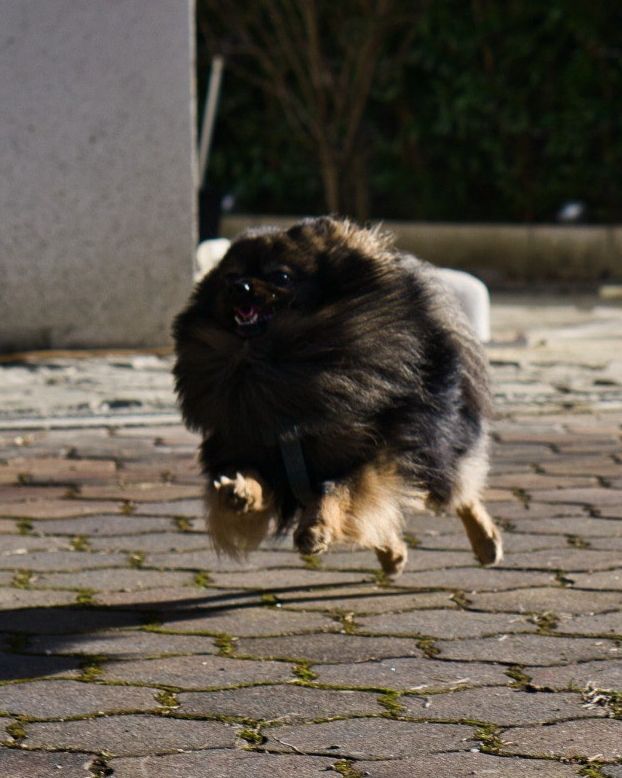
I love writing stories on my phone while listening to music and walking my dog at night. I often find myself inspired by the atmosphere of a song. I especially love finding unknown and “lower quality” songs.
As for specific genres, I’d say I most often end up following horror-related media.
──What are you most interested in at the moment, and how does that influence your creative work?
I recently found myself really captured by horror + comedy blends, like Widow’s Bay and Resident Evil (2026) (I also want to put Dorohedoro in this category). I admire how dynamic these works are, which really inspire me to work on the flow and tone of my own writing.
──What are your goals for the future?
An absolute dream of mine would be a longer multiple-chapter work… If it did come true, I might just die of happiness.
──Please share any advice/message you would give to creators around the world who are posting their work on MANGA Plus Creators and hoping to make their professional debut in Japan.
Here are some things that I’ve personally learnt during my manga creation process:
• It’s never too late to start!
• You don’t have to emulate Japanese manga. Tell an authentic story from the heart and Japanese readers will undoubtedly enjoy it for what it is. Don’t underestimate them!
• It’s good to find inspiration in forms of media other than manga as well.
• It really helps to explain your story to other people. It’s a great way to really understand what matters to you as an author and what you want to convey to the reader.
• Pacing, pacing, pacing.
• Writing a story for yourself is great, but you always have to keep the reader’s experience in mind. What kind of feeling do you want to convey?
• Lock in and keep working hard!

The next creator story could be yours.
Your story starts here.
You can enter the Monthly Awards contest just by submitting your Manga!
 Gold Award
Publication on
 Jump+ &
 Silver Award
Publication on
 Bronze Award
Publication on
 Creator Award