
Series Overview
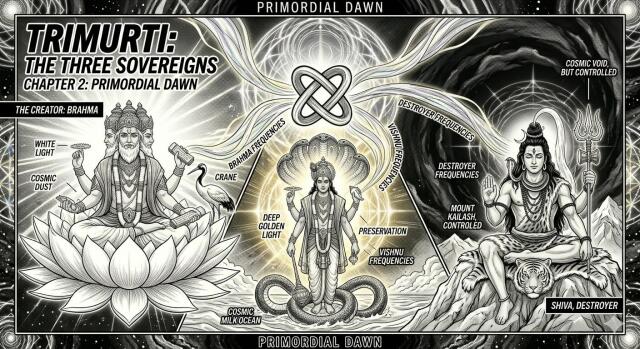
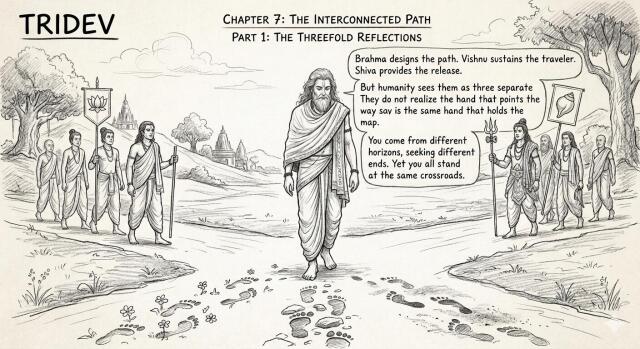
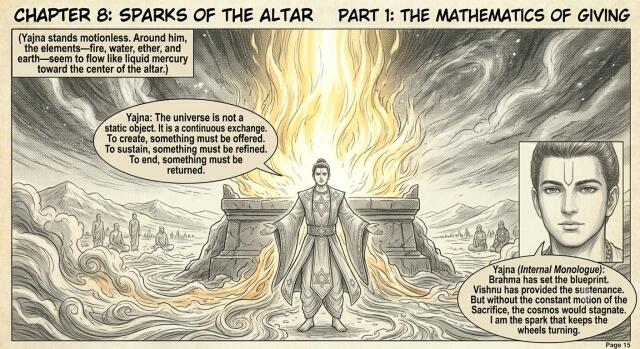
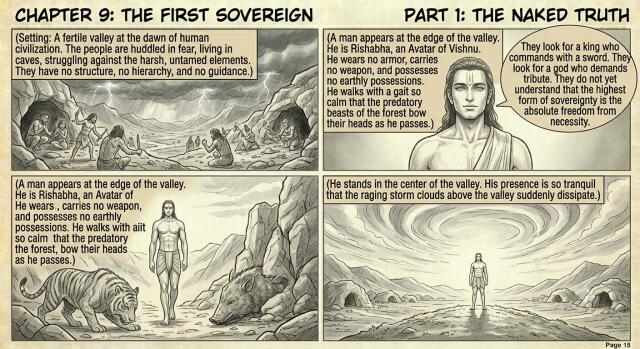
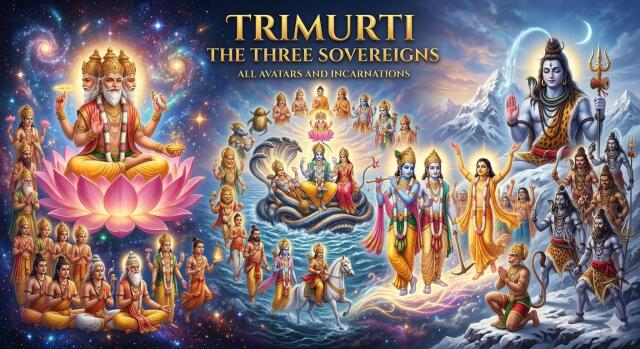
Trimurti: The Three Sovereigns is a multi-generational cosmic manga epic that chronicles the grand design, maintenance, and ultimate defense of the universe. Structured across 4 major sagas and spanning 110 chapters, the narrative weaves together the complete pantheons of the Trinity: the creative lineage of Lord Brahma, the 24 avatars of Lord Vishnu, the 11 Rudra avatars of Lord Shiva, and the ultimate dual-descent of Gaura Nityananda.
The 4 Major Sagas
1. Creation and the Formless Ages (Chapters 1–25)
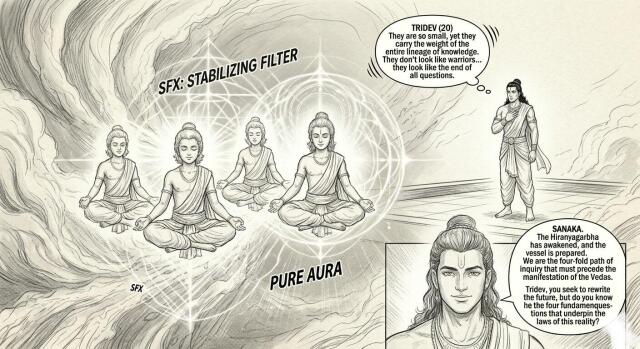
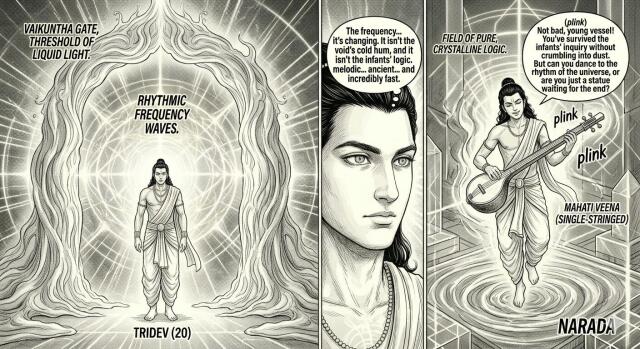
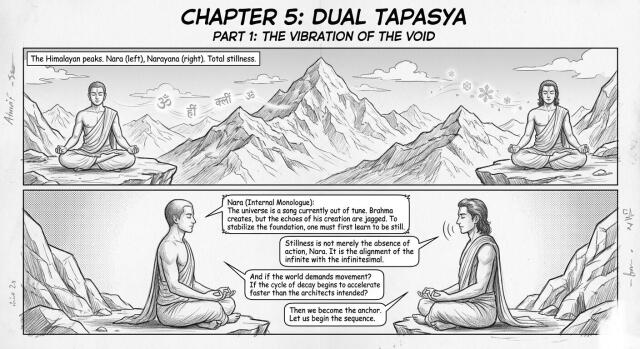
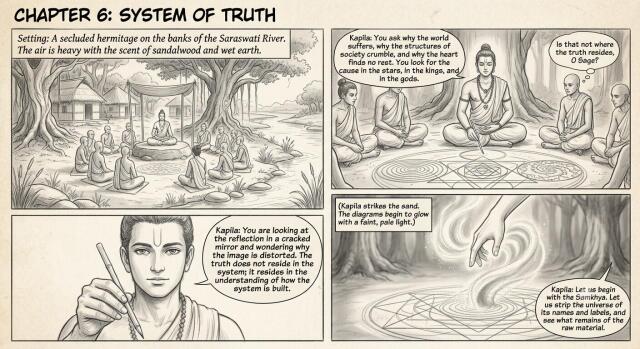
This opening saga establishes the dawning of the universe and the setting of cosmic laws. It introduces Lord Brahma’s lineage of cosmic architects, chroniclers, and sages (such as the Four Kumars, Kashyapa, and Valmiki) alongside the earliest, formless, and wisdom-bearing incarnations of Lord Vishnu (like Narada, Kapila, and Hayagriva). The cycle of Shiva's early Rudras anchors the harsh realities of space, time, and impermanence, culminating in the first universal flood (Pralaya) where Matsya guides the arc of survival.
2. The Age of Great Beasts and Warriors (Chapters 26–55)
Focusing heavily on high-octane action and territorial restructuring, this saga follows the physical stabilizing of the Earth. It showcases Vishnu's heavy-hitting zoomorphic and hybrid forms (Kurma, Varaha, and Narasimha) clearing systemic cosmic tyranny. The narrative shifts into legendary martial history, highlighting Parashurama’s absolute purges, Lord Rama's disciplined battle against dark factions alongside Shiva’s ultimate avatar Hanuman, and the strategic mastery of Krishna and Balarama during the era-defining Kurukshetra war.
3. The Twilight Age of Kalidas (Chapters 56–85)
As the dark timeline of the iron age (Kali Yuga) begins to infiltrate human consciousness, the method of cosmic rectification undergoes a radical shift. Moving away from weapons of steel and global resets (like the silent ideological interventions of Buddha or the tactical purging of Kalki), the Trimurti coordinates an unprecedented revolution of non-destructive, absolute devotion. The saga centers on the medieval Bengal horizon, where Chaitanya Mahaprabhu (Gaura)—Krishna cloaked in the emotional armor of Radha—and Nityananda Prabhu unifies to shake empires and transform hearts through the rhythmic, high-frequency power of the Sankirtan movement.
4. The Tridev Paradox (Chapters 86–110)
The final arc is a massive, multi-era crossover event triggered by a structural tear in time. The entire historical pantheon—all 24 avatars of Vishnu, the 11 Rudras of Shiva, and Brahma’s master builders—is simultaneously summoned to a singular plane to wage an absolute vanguard action against the personification of entropy and universal decay. When sheer martial power proves insufficient to resolve the chronological paradox, Gaura and Nityananda step forward to neutralize the enemy's malice with raw spiritual vibration, completely transforming the threat, resetting the cosmic equilibrium, and sealing a fully restored cosmos into smooth eternity.
Protagonist: Tridev
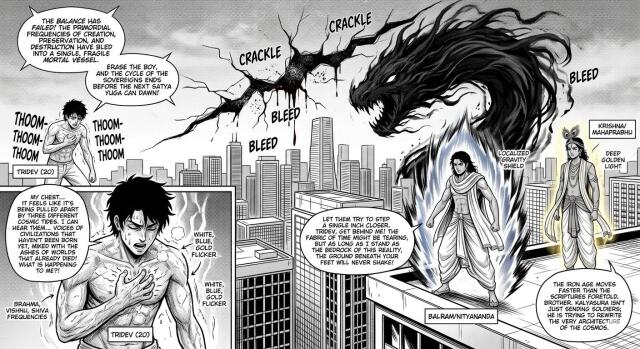
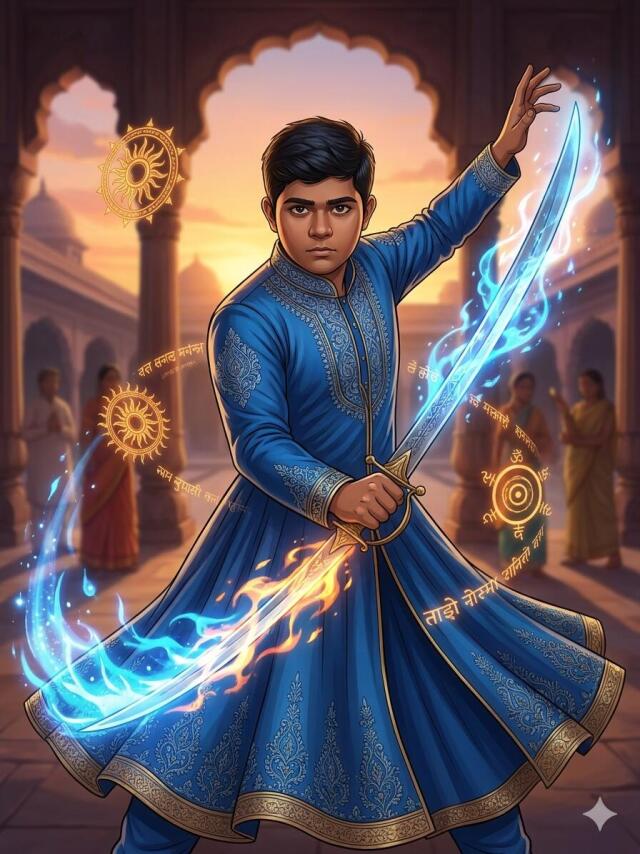
The Concept: A singular mortal youth born in the modern era who unexpectedly becomes the joint vessel for the prime, un-manifested essences of Brahma, Vishnu, and Shiva.
The Role: He starts the story entirely overwhelmed by the warring cosmic frequencies inside his own soul (Creation, Preservation, and Destruction). His journey is not just about fighting villains; it’s about mastering Sovereign Equilibrium so his body doesn’t tear itself apart. He must unlock the historical memories of the world's previous eras to survive the final war.
2. Deuteragonist: Krishna / Mahaprabhu (Gaura)
The Concept: The ultimate tactical and emotional guide. He exists in two states throughout the series—the brilliant, blueprint-weaving strategist of the Dwapara Yuga (Krishna), and the golden, weaponless revolutionary of the medieval era (Mahaprabhu).
The Role: As the Deuteragonist, he has the closest bond with Tridev. He acts as the spiritual mentor who teaches Tridev that true cosmic sovereignty isn't achieved through raw physical destruction, but through absolute internal alignment and divine love (Bhakti). He commands the emotional core of the manga.
3. Tritagonist: Balarama / Nityananda
The Concept: The unbreakable bedrock of the team. Whether swinging his seismic ploughshare as Balarama or absorbing absolute physical violence without flinching as Nityananda, he represents infinite mercy coupled with immovable physical authority.
The Role: He is the literal shield of the group. While Krishna guides Tridev's soul, Nityananda protects Tridev's physical body. He handles the heavy-hitting, front-line defensive battles, stepping in whenever the protagonist is on the verge of breaking.
4. Tetratagonists: Rama & Hanuman
The Concept: The dynamic duo of Absolute Duty (Dharma) and Boundless Power. Lord Rama represents the flawless, disciplined execution of law, while Hanuman is the ultimate wildcard powerhouse who can alter his size and carry entire planetary bodies.
The Role: They dominate the mid-tier war arcs. Rama provides Tridev with the tactical blueprint for structural governance and warfare, teaching him how to act as a proper "Sovereign." Hanuman serves as the emotional bridge, inspiring the protagonist with his selfless, infinite loyalty.
5. Pentagonist: Buddha
The Concept: The silent disruptor of reality. He steps away from physical combat entirely, weaponizing an aura of absolute emptiness and stillness.
The Role: Buddha acts as the philosophical anchor. When the team faces enemies that feed on aggression, kinetic energy, or hatred, Buddha steps forward to neutralize the entire battlefield’s physics. He teaches Tridev how to find the "Middle Way" to quiet the chaos inside his own spirit.
THE ANTAGONIST
To push a cast of this cosmic scale to their absolute limits, you need a villain who isn't just a powerful demon, but a systemic cosmic force.
30 strongest character
1. Para Brahman
2. Lord Vishnu
3. Lord Shiva
4. Lord Brahma
5. Tridevi
6. Lord Sheshnag
7. Lord Ganesha
8. Lord Kartikeya
9. Lord Kalki
10. Lord Hanuman
11. Lord Rama
12. Lord Narasimha
13. Lord Balram
14. Lord Krishna
15. Lord Parashurama
16. Prabhu Nityananda
17. Maha Prabhu Shree Chaitanya
18. Vamana
19. Vyasa
20. Kapila
21. Dattatreya
22. Hayagriva
23. Nara-Narayana
24. Bheem (Rudra Avatar)
25. Virupaksha
26. Mohini
27. Dhanvantari
28. Shukra
29. Kashyapa
30. Matsya
Awards
- Monthly Awards May 2026
- 479th
- Published
- 2026-05-19
- Updated
- 2026-06-26