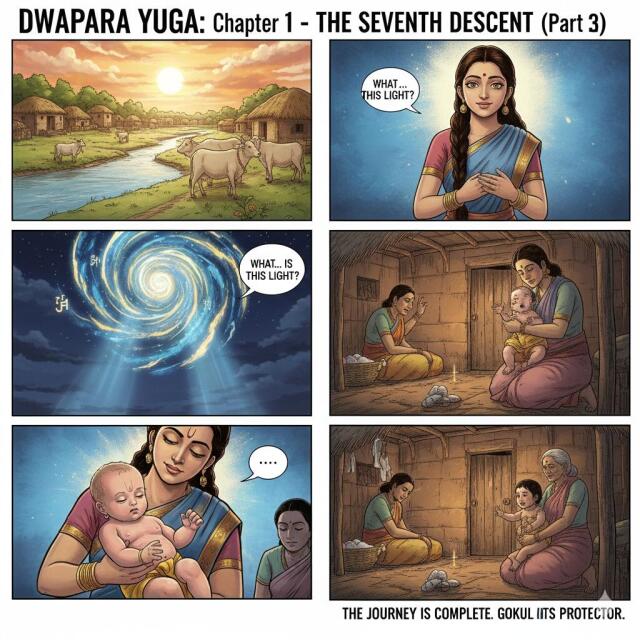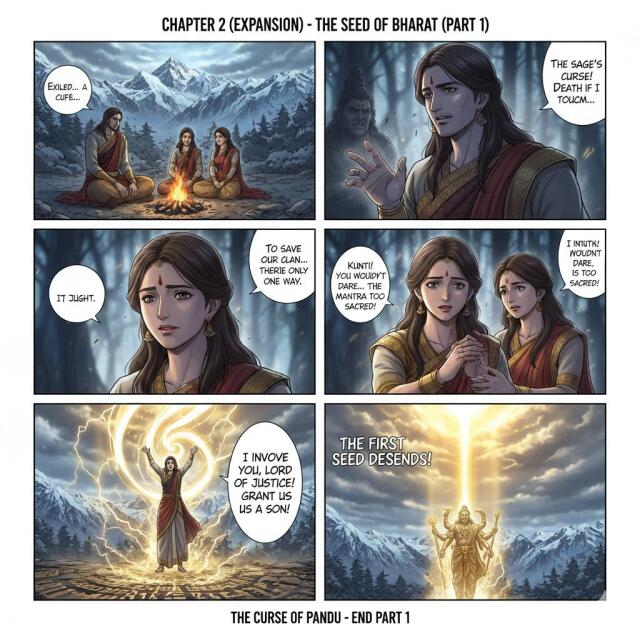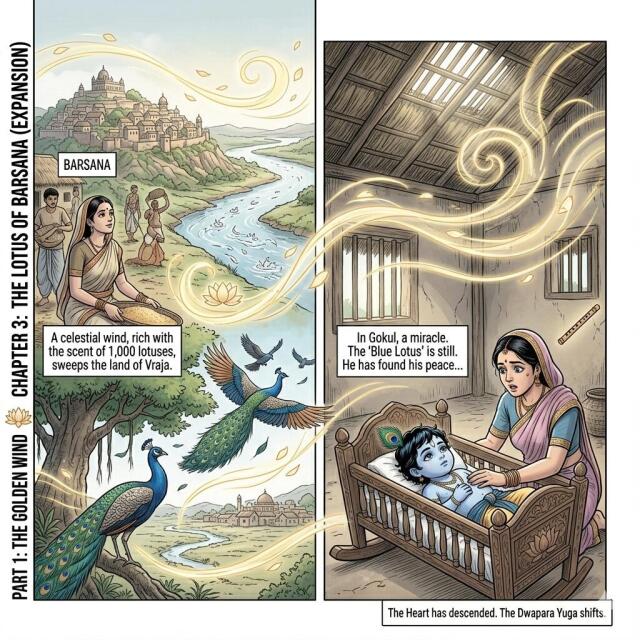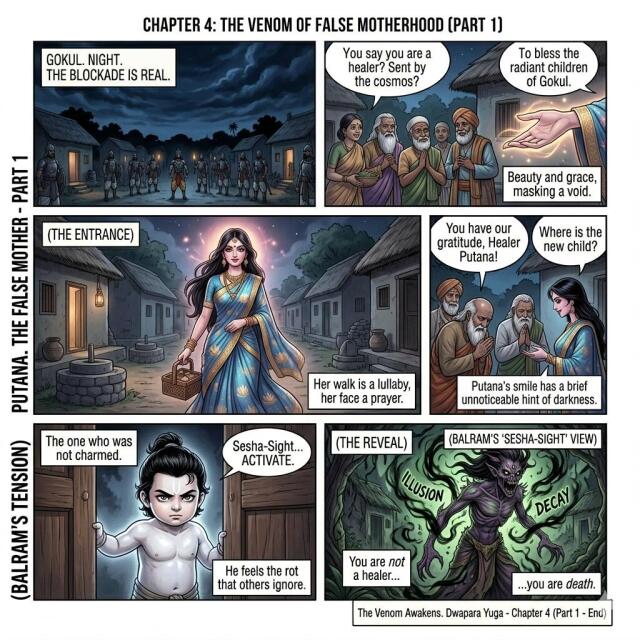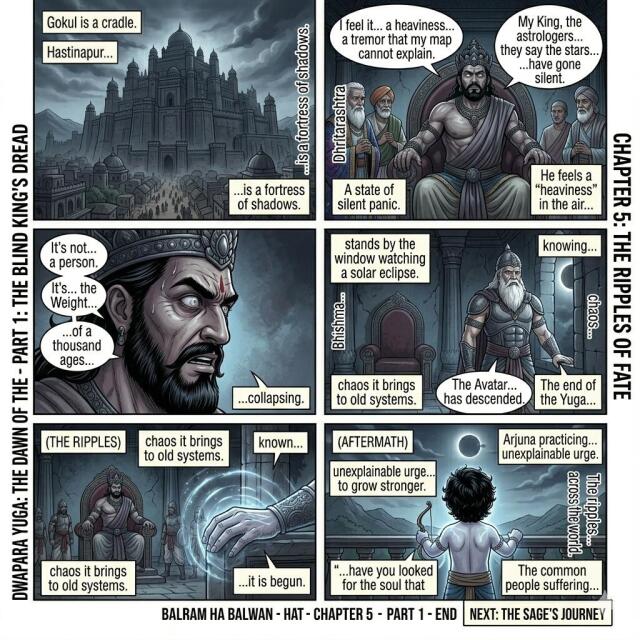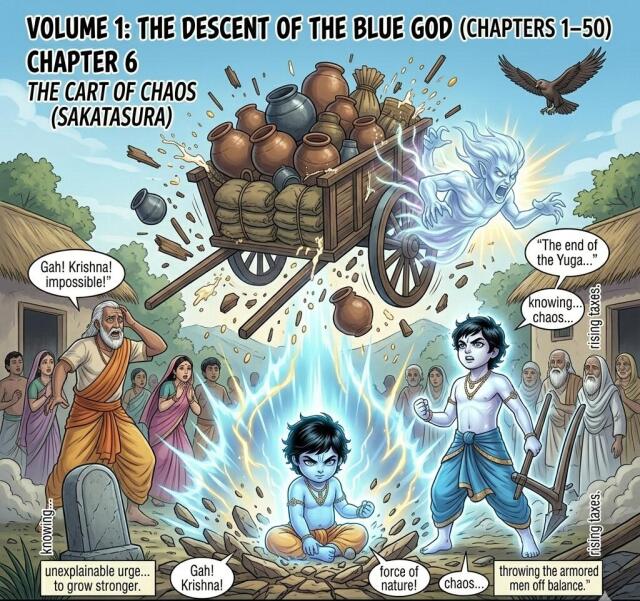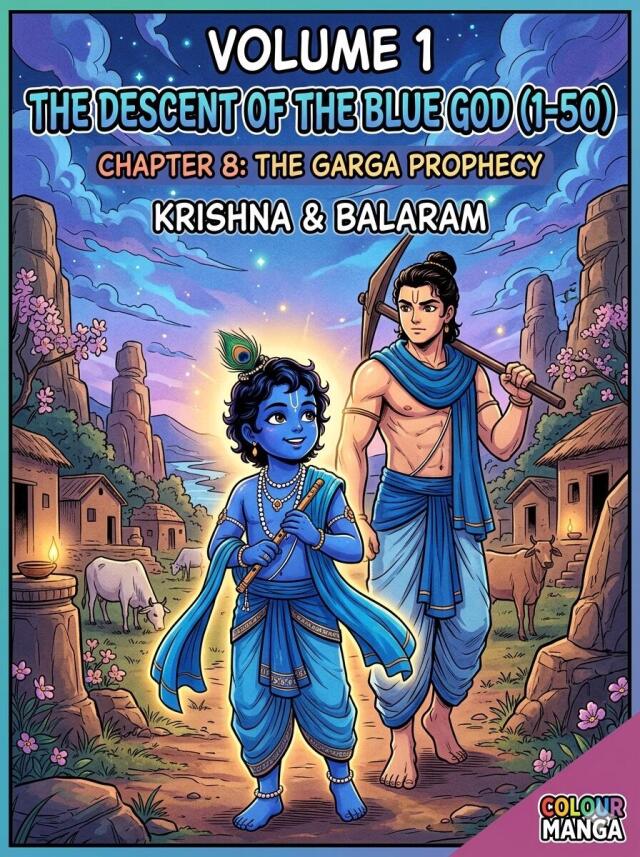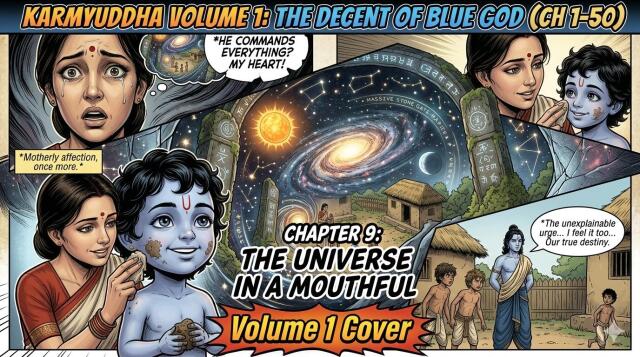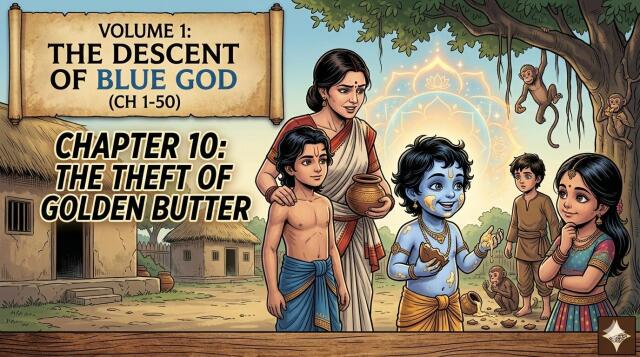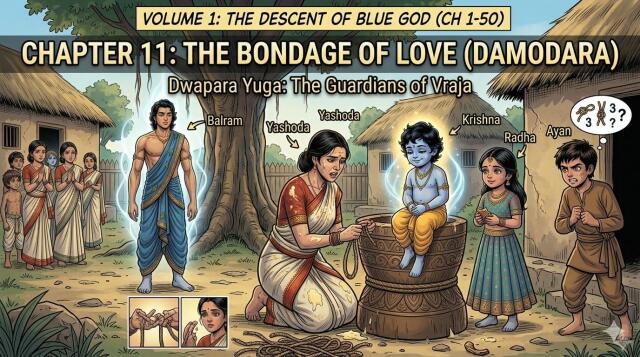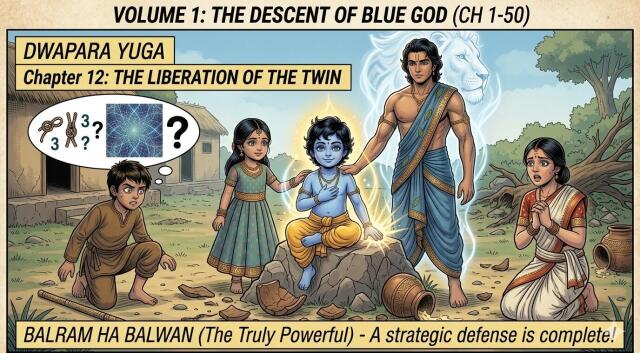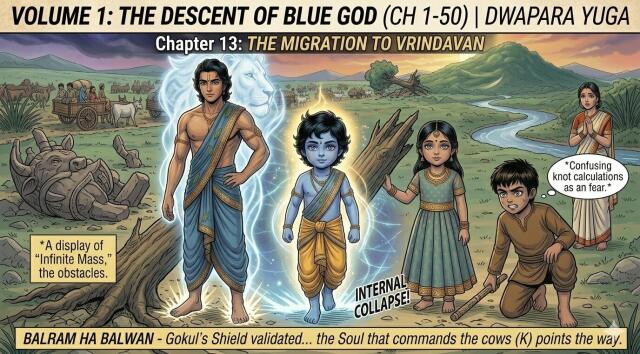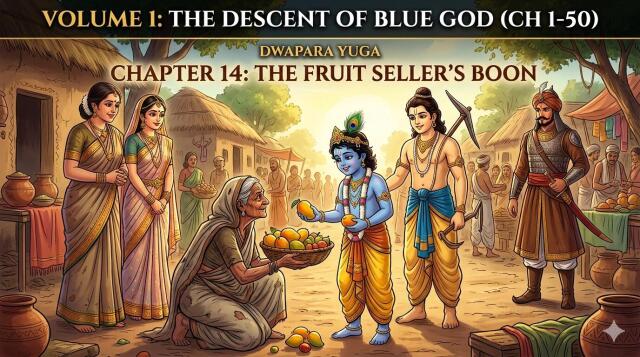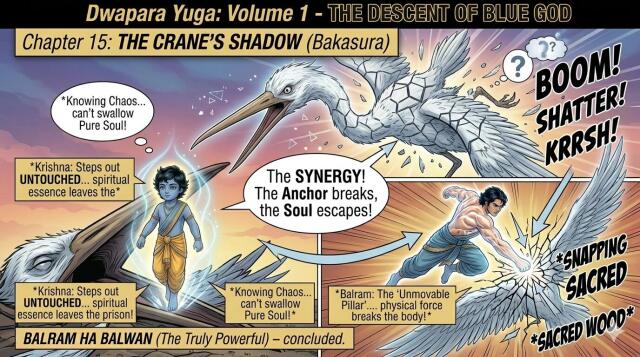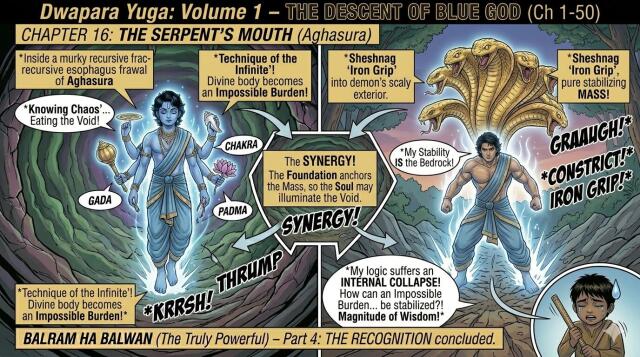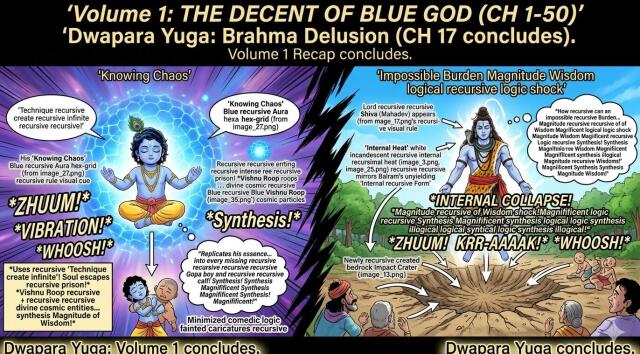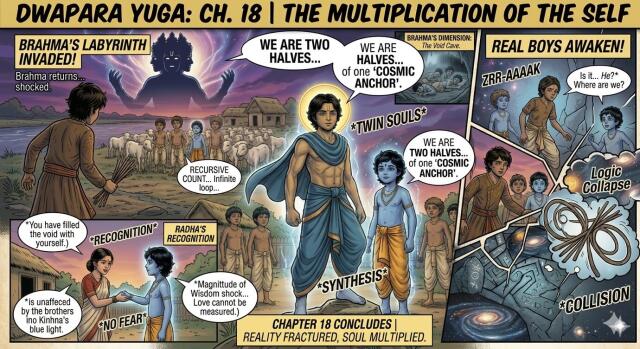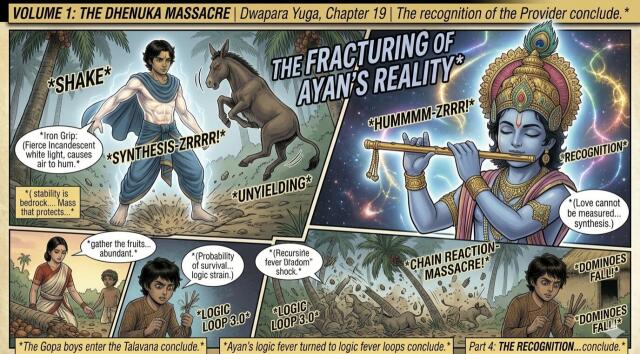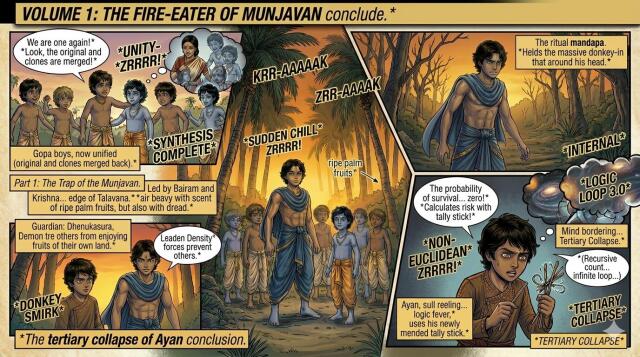

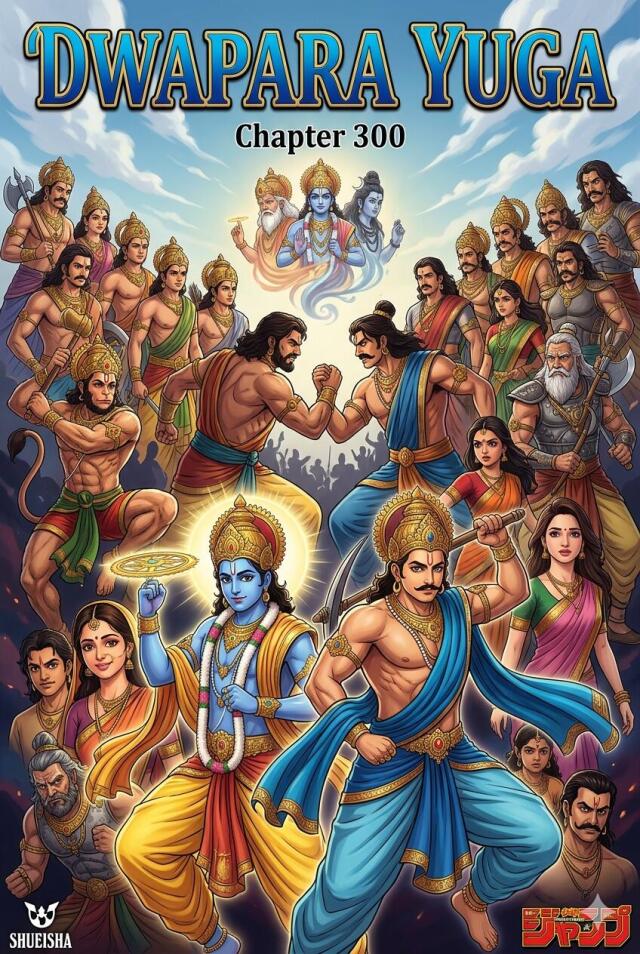
The Dwapara Yuga series is a metaphysical epic that reinterprets the life of Krishna as a "Synthesis of Fate." While your spin-off Balram Ha Balwan focuses on physical mass and stability, the main series focuses on the "Vibration of the Soul" and the transition of the universe from a golden age of magic to the leaden density of the Kali Yuga.
The Five Pillars of Dwapara Yuga
Protagonist: Shree Krishna (The Soul)
Concept: Knowing Chaos and The Blue Aura.
Role: He is the "Infinite Form" navigating a finite world. His journey is to break the "Logic Loops" of the old world and establish the "Yoga of Action."
Deuteragonist: Shree Balram (The Anchor)
Concept: Unmovable Pillar and Internal Heat.
Role: The foundational strength. He provides the "Stabilizing Mass" that allows Krishna’s miracles to manifest without shattering the physical world. He is the guardian of the "External Form."
Tritagonist: Rukmini (The Magnitude of Grace)
Concept: Fractal Devotion and Golden Radiance.
Role: The Avatar of Lakshmi. She represents the "Social Stability" and "Royal Order" of Dwarka. Her intelligence is the "Strategic Logic" that balances Krishna’s chaotic nature.
Tetratagonist: Arjuna (The Focus of the Bow)
Concept: Precision Vibration and Gandiva’s Song.
Role: The human student. He represents the "Magnitude of Doubt" that must be converted into the "Yoga of Knowledge" during the Kurukshetra Dawn.
Pentagonist: Radha (The Labyrinth of Love)
Concept: Synthesis of Presence and The Flute’s Echo.
Role: She is the "Emotional Mirror." Though physically separated from Krishna after Vraja, her "Vibration Synthesis" remains his internal compass.
The 50-Character Ensemble
The Antagonists (The Leaden Density)
Kansa: The source of Logic-Defying Cruelty.
Jarasandha: The Unstoppable Army logic; represents physical obsession.
Duryodhana: The Magnitude of Envy; the anchor of the Kaurava side.
Shakuni: The Tactical Malice; uses "Probability Logic" (dice) to destroy.
Karna: The Tragedy of the Sun; represents "Fragmented Loyalty."
Shishupala: The 100 Sins; represents the ego’s "Internal Collapse."
Narakasura: The Shadow of the Earth; represents the hoarding of power.
Kalayavana: The Indestructible Barbarian; the force of "Foreign Chaos."
Poundraka: The False Avatar; the "Mirror of Delusion."
Ashwatthama: The Eternal Curse; represents the "Vengeance of the Mind."
The Inner Circle (Vraja & Mathura)
Ayan: The Logic of Man; your primary observer who suffers "Logic Fever."
Vasudeva: The "Cellular Source."
Devaki: The "Womb of Suffering."
Nanda Baba: The "Village Anchor."
Yashoda: The "Heart of the Universe."
Rohini: The "Star of Patience."
Sudama: The "Synthesis of Loyalty."
Ugrasena: The "Restored Law."
Akrura: The Messenger of Doubt.
Sridama: The "Conflict of Love."
The Pandava & Kuru Elders
Yudhishthira: The Rigidity of Dharma.
Bhima: The Hunger of Strength.
Nakula: The Symmetry of Form.
Sahadeva: The Silent Seer.
Draupadi: The Fire of Vengeance.
Bhishma: The Lethal Vow; the "Great Anchor of the Past."
Drona: The Military Logic Master.
Kunti: The Matrix of Duty.
Gandhari: The Blindness of Fate.
Dhritarashtra: The Darkness of Attachment.
Vidura: The Voice of Conscience.
The Dwarka & Royal Allies
Satyabhama: The Elemental Pride.
Jambavati: The Ancient Mystery.
Pradyumna: The Return of Desire.
Satyaki: The Blade of the Vrishnis.
Uddhava: The Philosopher of the Void.
Revati: The Magnitude of Time (Balram's Tritagonist).
Abhimanyu: The Short-Lived Spark.
Parikshit: The Seed of the Future.
Celestial & Mythical Entities
Narada: The Catalyst of Chaos.
Indra: The Storm Ego.
Surabhi: The Divine Motherhood.
Hanuman: The Immortal Link.
Vyasa: The Scribe of Eternity.
Mahadeva (Shiva): The Dissolution of Matter.
I. The Dawn: The Two Pillars (Chapters 1–80)
The Yuga begins with the earth groaning under the weight of demonic kings. To restore balance, the Divine descends in two forms: Balram (the Strength) and Krishna (the Wisdom).
The Struggle: This era is defined by the battle against the "Old World" tyrants like Kansa and Jarasandha.
The Shift: Unlike the previous age (Treta Yuga), justice is no longer black and white. It requires strategy, politics, and immense sacrifice.
II. The Zenith: The Golden Age of Dvaraka (Chapters 81–180)
As the brothers grow, they establish Dvaraka, a masterpiece of architecture and a symbol of hope.
The Unity: This period sees the rise of the Pandavas, representing the highest potential of humanity.
The Rivalry: The shadow side grows through the Kauravas, led by Duryodhan, and the tragic figure of Karn, who represents the "Wrong Man on the Wrong Side."
The Deuteragonists: The wisdom of Rukmini, the fire of Draupadi, and the devotion of Revati hold the social fabric of the Yuga together.
III. The Eclipse: The Kurukshetra War (Chapters 181–300)
The turning point of the Yuga. All the world's power is gathered on a single field of 18 days.
The Philosophy: Krishna delivers the Bhagavad Gita to Arjun, explaining that the Yuga must end because the old structures are too corrupt to save.
The Loss: Almost every legendary warrior falls. Balram, seeing the destruction of his pupils, realizes that the time of "The Master" is over.
IV. The Sunset: The Final Harvest (Chapters 301–350)
The aftermath of the war shows a world weary and broken.
The Yadava Fall: The decadence of the surviving clans leads to their own destruction, proving that even the victors cannot escape the flow of time.
The Ascension: Balram returns to the cosmic ocean as the serpent Adishesha, and Krishna is taken by a hunter's arrow.
The Legacy: The Yuga ends as the sea swallows Dvaraka, leaving only the memories of the legends to guide humanity through the dark age of Kali Yuga.
Awards
- Monthly Awards Feb 2026
- 245th
- Published
- 2026-02-25
- Updated
- 2026-03-15